Understanding Ohio’s Pest Calendar
Living in Southwest Ohio means dealing with a rotating cast of pests throughout the year. Every season brings a different set of challenges, and Warren County’s mix of suburban development, agricultural land, and wooded areas creates ideal conditions for a wide variety of insects and wildlife.
Understanding which pests are active and when they are most likely to invade your home is the first step toward effective prevention. Here is what homeowners in Lebanon, Springboro, Mason, and Middletown should watch for in each season.
Spring Pests (March - May)
As temperatures climb above 50 degrees F, dormant pest populations wake up and start looking for food, water, and shelter.
Ants
Ants are the most common pest complaint in Warren County during spring. Carpenter ants, odorous house ants, and pavement ants all become active as the ground thaws.
Prevention tips:
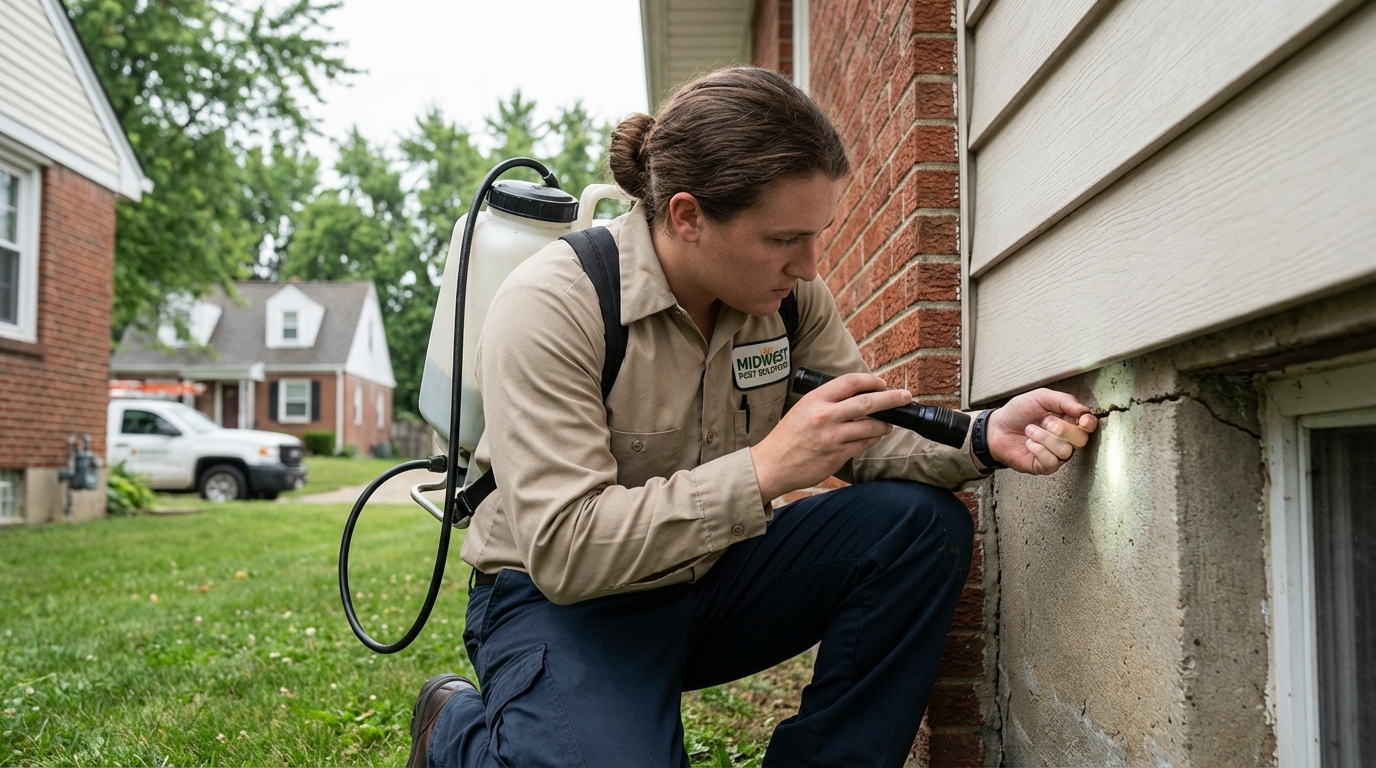
- Seal cracks around your foundation, windows, and doors with silicone caulk
- Keep mulch at least 12 inches away from your home’s foundation
- Fix any leaking faucets or pipes — ants are drawn to moisture
- Store food in sealed containers and clean up crumbs promptly
Termites
Termite swarmers typically emerge in April and May in Southwest Ohio. If you see winged insects near your windows or a pile of discarded wings on your windowsills, you may have a termite colony nearby.
Why this matters: A single termite colony can consume several pounds of wood per year. By the time you see visible damage to your home, the colony has likely been active for years. Annual inspections are the most effective defense.
Spiders
Wolf spiders, house spiders, and brown recluse spiders all become more active in spring. While most Ohio spiders are harmless, brown recluse bites can cause serious tissue damage.
Prevention tips:
- Remove clutter from basements, garages, and closets where spiders hide
- Shake out shoes, gloves, and clothing stored in dark areas before wearing them
- Install yellow or sodium vapor exterior lights, which attract fewer insects and therefore fewer spiders
Summer Pests (June - August)
Summer’s heat and humidity bring the most intense pest pressure of the year in Warren County.
Mosquitoes
Ohio’s humid summers create perfect breeding conditions for mosquitoes. Standing water in birdbaths, clogged gutters, flower pot saucers, and low spots in your yard can produce thousands of mosquitoes.
Prevention tips:
- Eliminate standing water within 100 feet of your home — mosquitoes can breed in as little as a bottle cap full of water
- Clean gutters regularly to prevent water pooling
- Keep grass mowed short near the house — adult mosquitoes rest in tall vegetation during the day
- Consider professional mosquito barrier treatments for your yard, especially if you enjoy outdoor entertaining
Wasps and Yellow Jackets
These stinging insects build nests in eaves, attic vents, bushes, and underground burrows. Yellow jacket nests grow throughout the summer and reach peak population in late August and September.
Warning: Yellow jackets become aggressive in late summer as their food sources decline. Do not attempt to remove a large nest yourself. Professional removal is the safest approach.
Ticks
Deer ticks and dog ticks are common in Warren County’s wooded areas and tall grass. Lyme disease, transmitted by deer ticks, has been increasing in Ohio in recent years.
Prevention tips:
- Keep your lawn mowed and remove leaf litter from the edges of your property
- Create a 3-foot gravel or wood chip barrier between your lawn and any adjacent wooded areas
- Treat pets with veterinarian-recommended tick prevention products
- Check yourself and your family for ticks after spending time outdoors in wooded or brushy areas
Fall Pests (September - November)
As temperatures drop, many pests seek shelter inside your home for the winter.
Mice and Rats
Rodents start looking for warm shelter as early as September. A mouse can squeeze through a gap the size of a dime.
Prevention tips:
- Inspect your home’s exterior for gaps around utility pipes, vents, and the foundation
- Install door sweeps on all exterior doors
- Seal gaps around garage doors — garages are a primary entry point for rodents
- Store birdseed, pet food, and grass seed in sealed containers, not open bags
Stink Bugs
Brown marmorated stink bugs are an invasive species that has become a major fall nuisance in Southwest Ohio. They congregate on the sunny sides of buildings in September and October, seeking entry points to overwinter indoors.
Prevention tips:
- Seal cracks around windows, doors, and utility penetrations before September
- Repair or replace damaged window screens
- Do not crush stink bugs inside your home — they release a foul odor. Instead, vacuum them up or catch them in soapy water.
Box Elder Bugs
Similar to stink bugs, box elder bugs congregate on warm, sunny exterior walls in fall. They enter homes through cracks and gaps and can appear in large numbers.
Prevention tip: Removal of female box elder trees near your home can significantly reduce populations, as the bugs feed primarily on the seeds of these trees.
Winter Pests (December - February)
Winter does not mean pest-free. Several pests are active inside heated homes throughout Ohio’s cold months.
Mice and Moles
Rodent activity inside homes peaks during winter. If you hear scratching in your walls or attic at night, you likely have mice or possibly squirrels.
Signs of a rodent problem:
- Small droppings (mouse droppings are the size of a grain of rice)
- Gnaw marks on food packaging, wiring, or wood
- Grease marks along baseboards where rodents travel repeatedly
- Nesting materials (shredded paper, fabric, or insulation)
Cockroaches
German cockroaches are active year-round in heated homes. They thrive in kitchens and bathrooms where food, water, and warmth are readily available.
Overwintering Pests
Stink bugs, lady beetles, and cluster flies that entered your home in fall may become active on warm winter days, appearing around windows and light fixtures.
Building a Year-Round Prevention Strategy
The most effective pest management is proactive, not reactive. Here is a practical framework for Warren County homeowners:
- Quarterly professional treatments create a protective barrier around your home through all four seasons
- Annual termite inspections catch problems before they cause structural damage
- Seasonal sealing of cracks and gaps keeps pests from finding entry points
- Moisture management through proper drainage and gutter maintenance eliminates the water sources pests need
- Landscape maintenance including mowing, pruning, and mulch management reduces pest habitat near your home
When DIY Is Not Enough
Over-the-counter pest products can address minor problems, but they rarely solve established infestations. Professional pest control is recommended when:
- You see termite swarmers or evidence of wood damage
- Rodent activity persists despite sealing entry points
- You have a wasp or yellow jacket nest in a difficult-to-reach location
- You are dealing with recurring pest problems that return after DIY treatment
- You want consistent year-round protection without the guesswork
Need help protecting your Warren County home from pests? Contact Poff’s Lawn Care & Pest Control for a free inspection. Call (513) 932-1319 or schedule a consultation online. We have been keeping Southwest Ohio homes pest-free since 1987.